
The Hypogeum

Home – The Church of Santa Maria della Porta

An underground space

A hypogeal complex preserving centuries of history

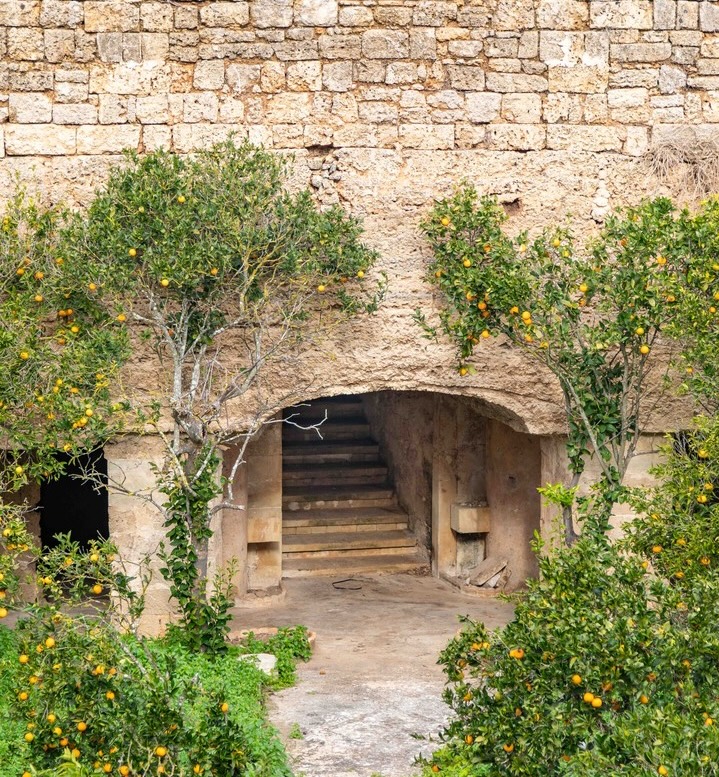
Upon entering the complex of Santa Maria della Porta, through an entrance set within the garden of Mr. Pietro Villani, the first feature encountered is a staircase carved directly in the rock.

The upper section is protected by a small tower clad in Lecce stone, while the lower section descends into the ground to  reach the underground level.

It is a passage that immediately introduces the distinctive character of the site: a hidden underground environment, shaped by human hands over the centuries.

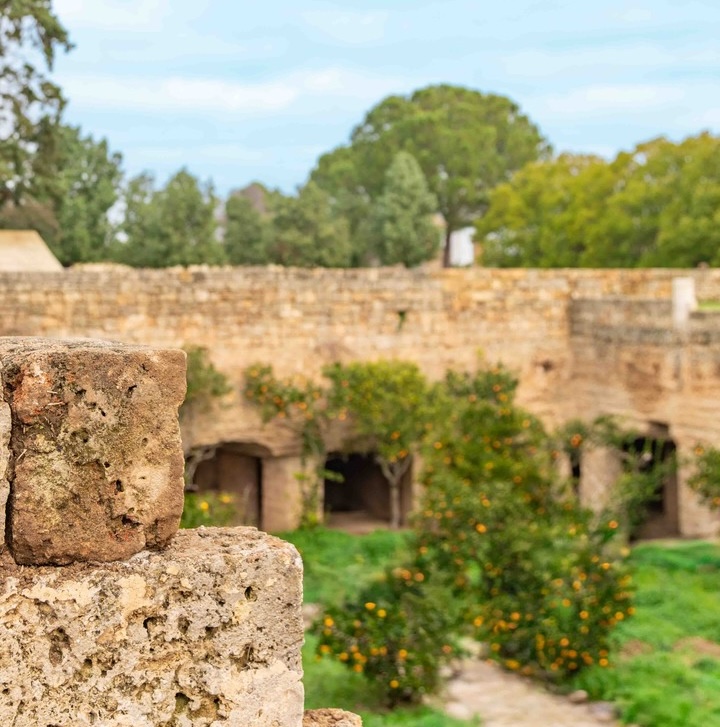
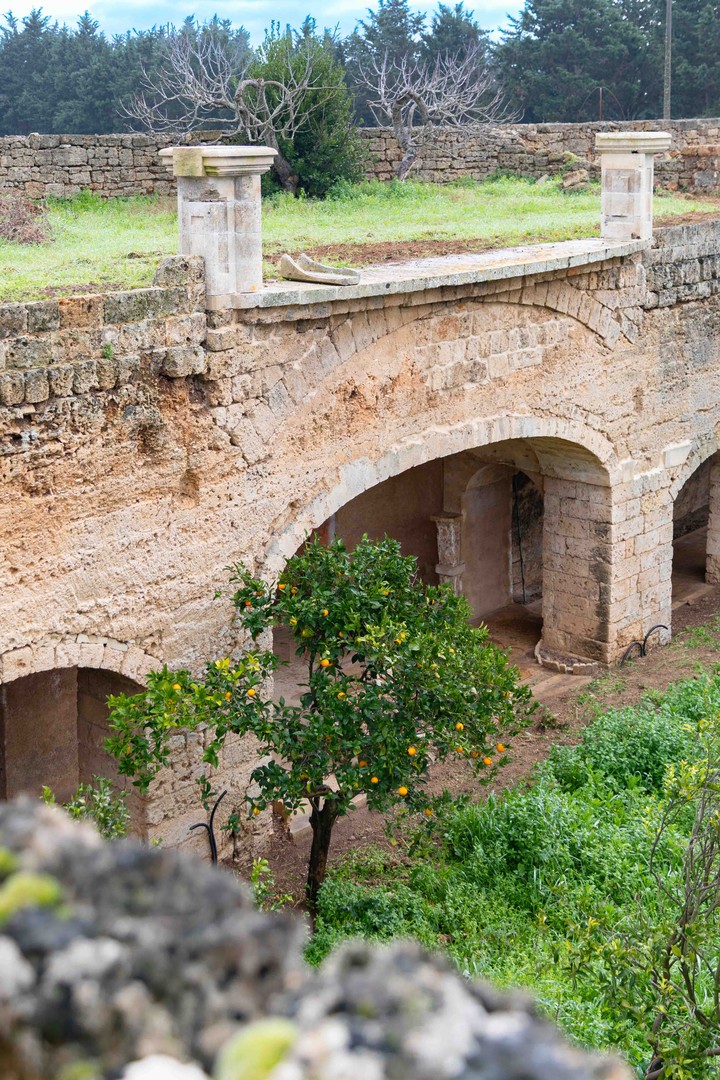
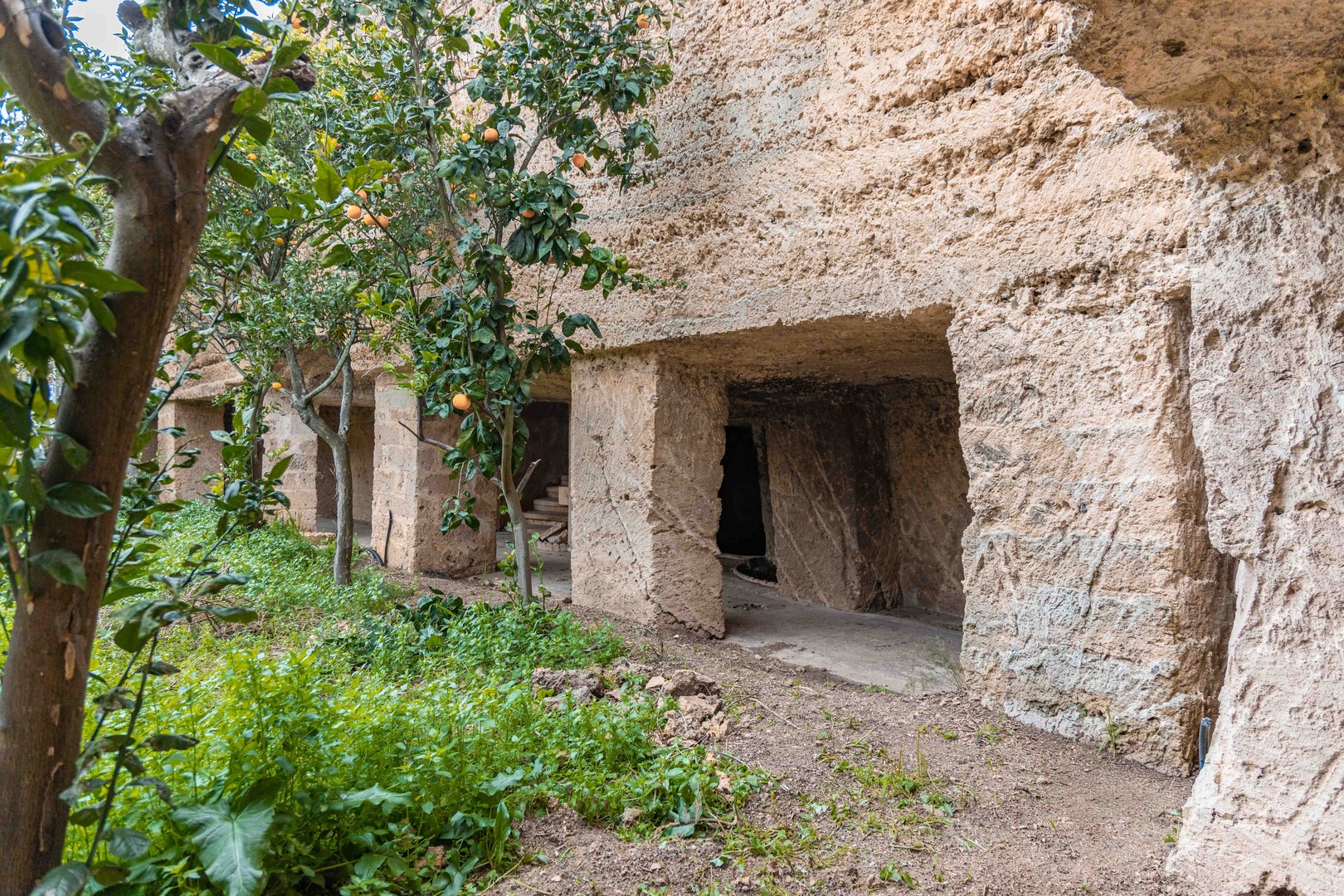
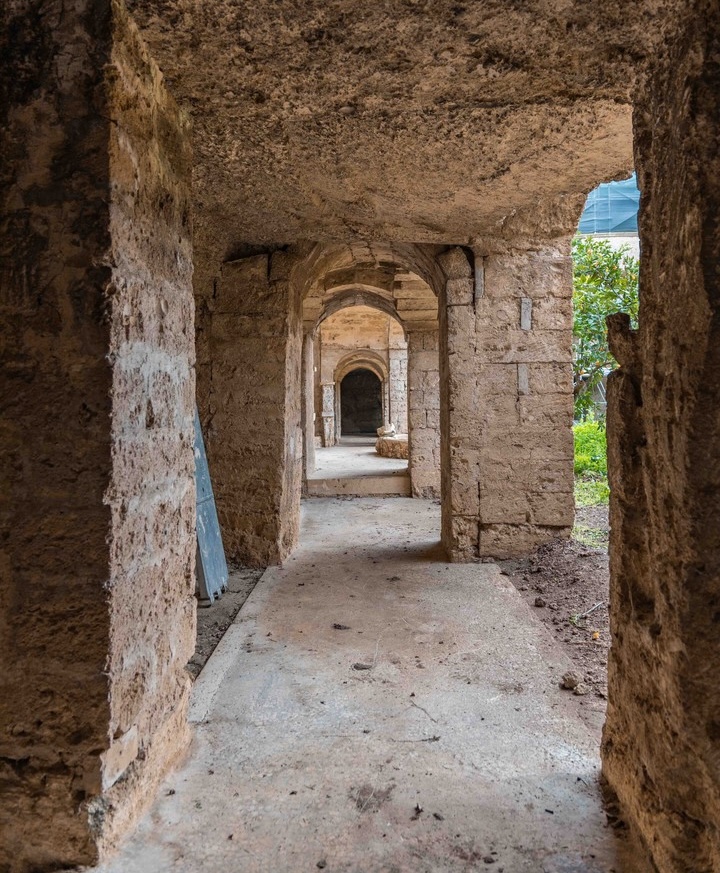
Once the descent is complete, a vast open-air space unfolds: a rectangle measuring approximately twenty by twenty-three metres, entirely carved into the local calcarenite. The vertical walls still bear the marks of quarrying, clear evidence that the site originated as a quarry, similar to the traditional tagghiate of Salento.

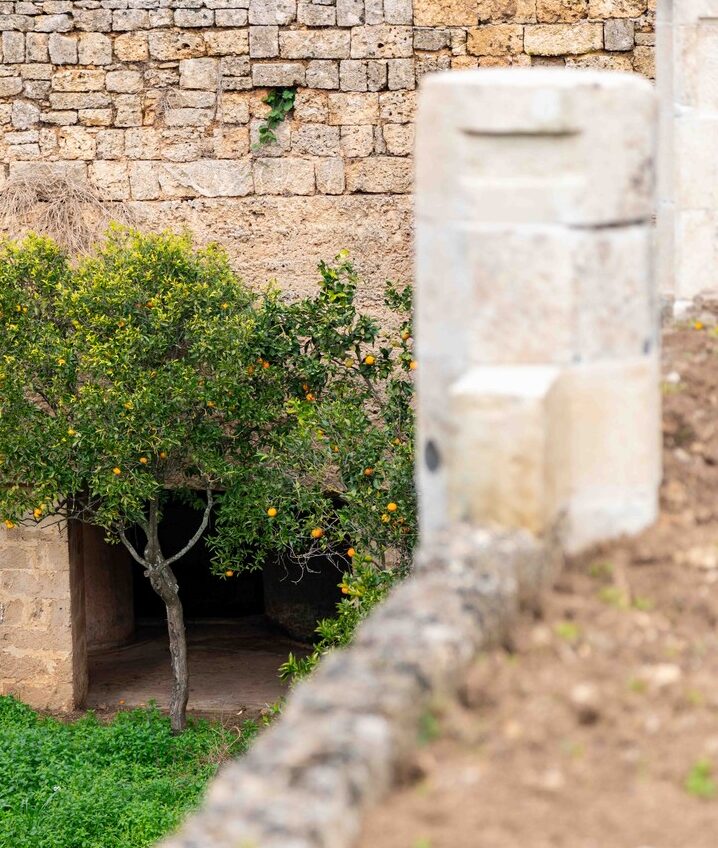
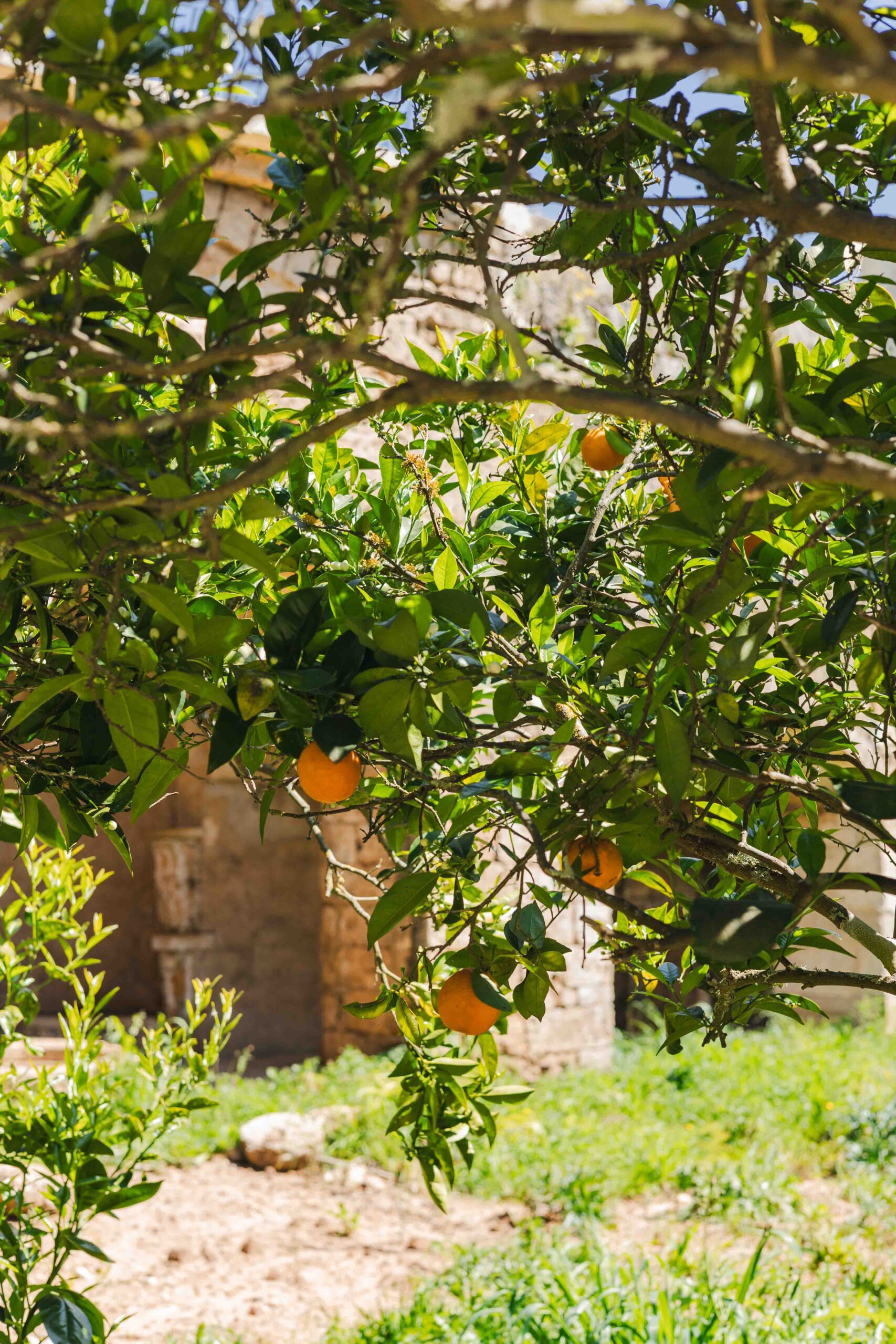
Today, the space appears as a large underground courtyard, at the centre of which a historic citrus grove still survives, long overgrown by invasive vegetation.

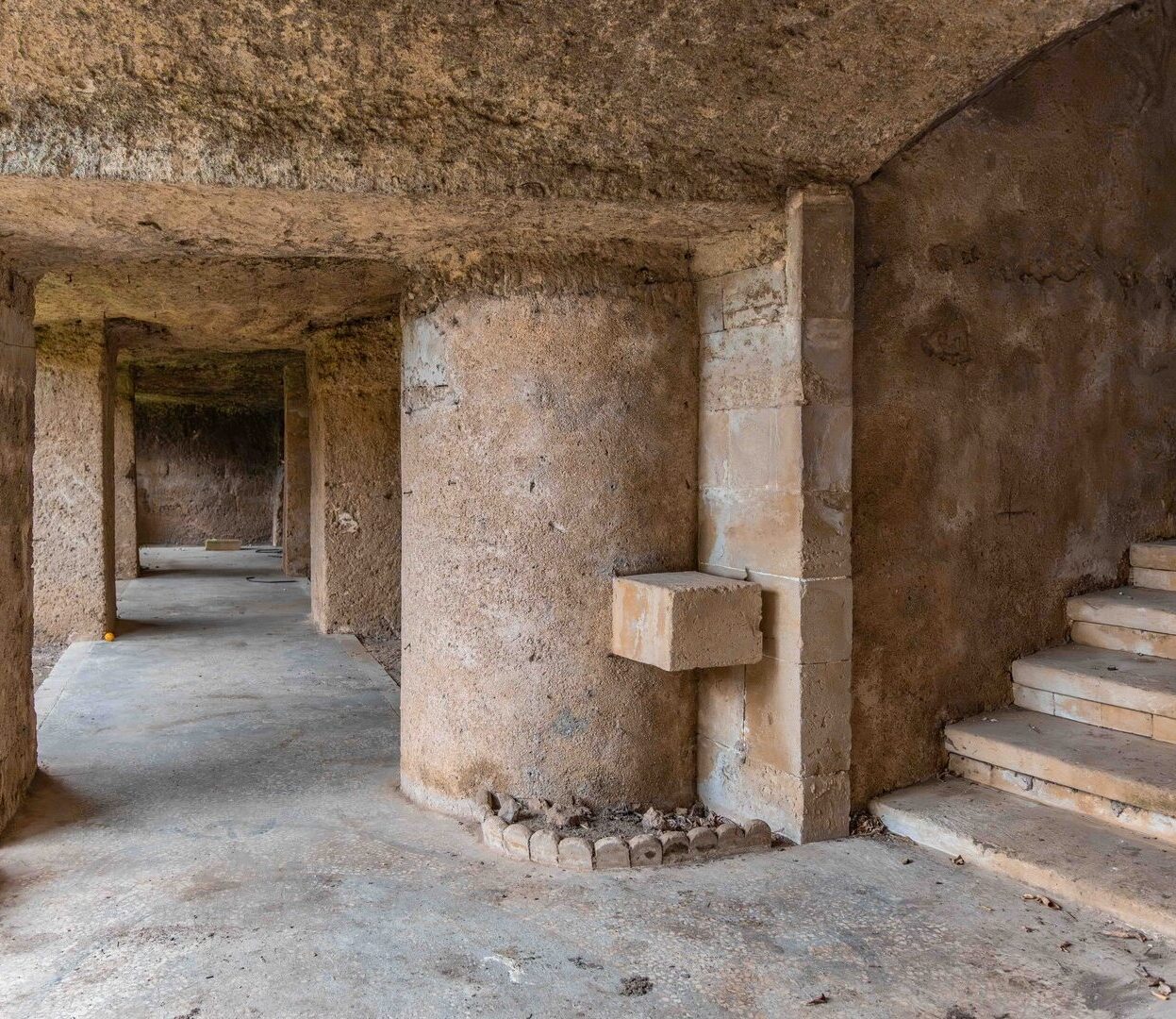
Along three sides of the perimeter runs a covered walkway, also carved into the rock, evoking the form of a rock-cut cloister. Shortly after the staircase, two secondary spaces come into view, likewise excavated into the wall: modest in size and about two and a half metres high, they likely served as storage areas or small shelters.

ninfeo della chiesa di santa maria alla porta di Galatina

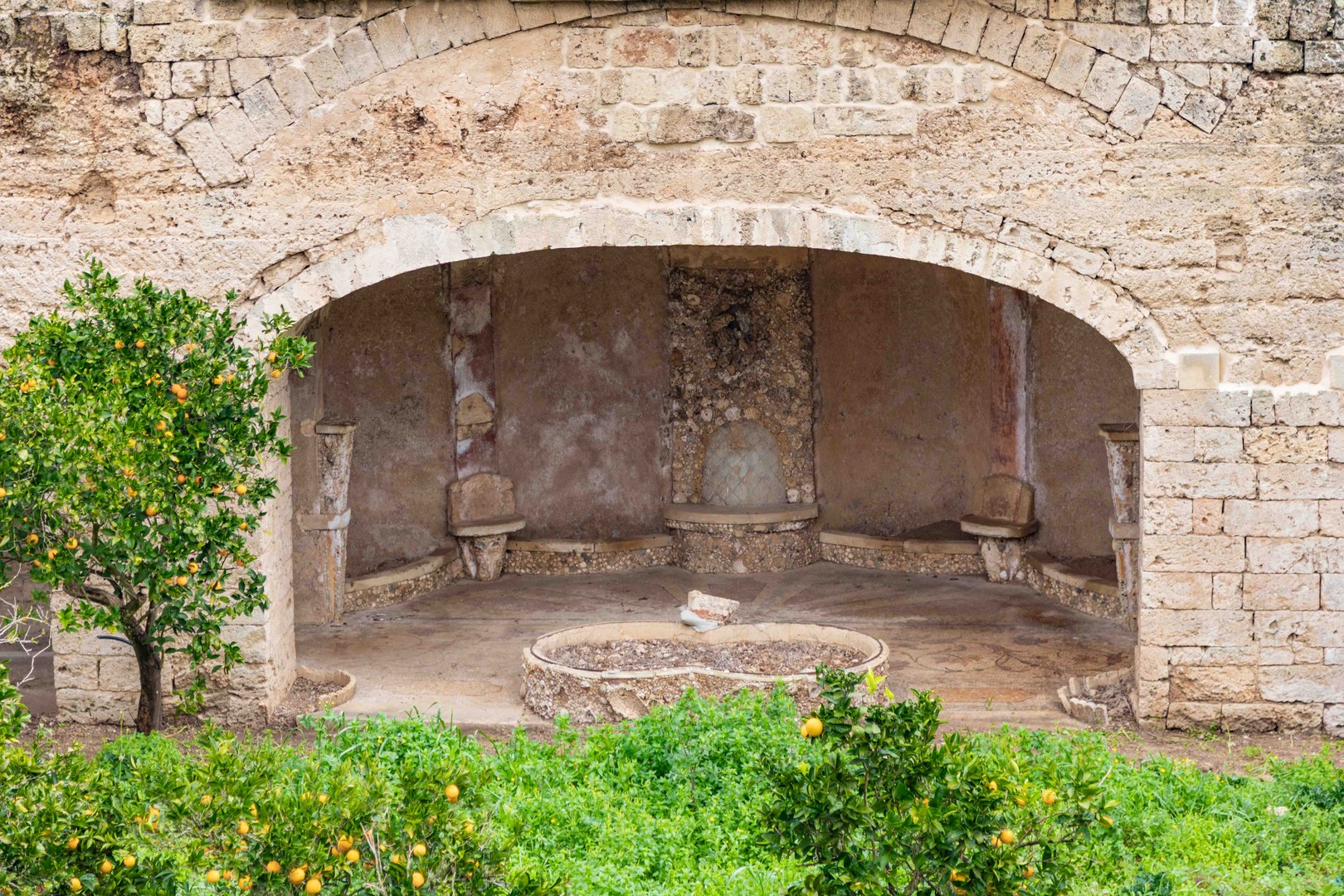
The 19th-century nymphaeum and the bi-circular basin

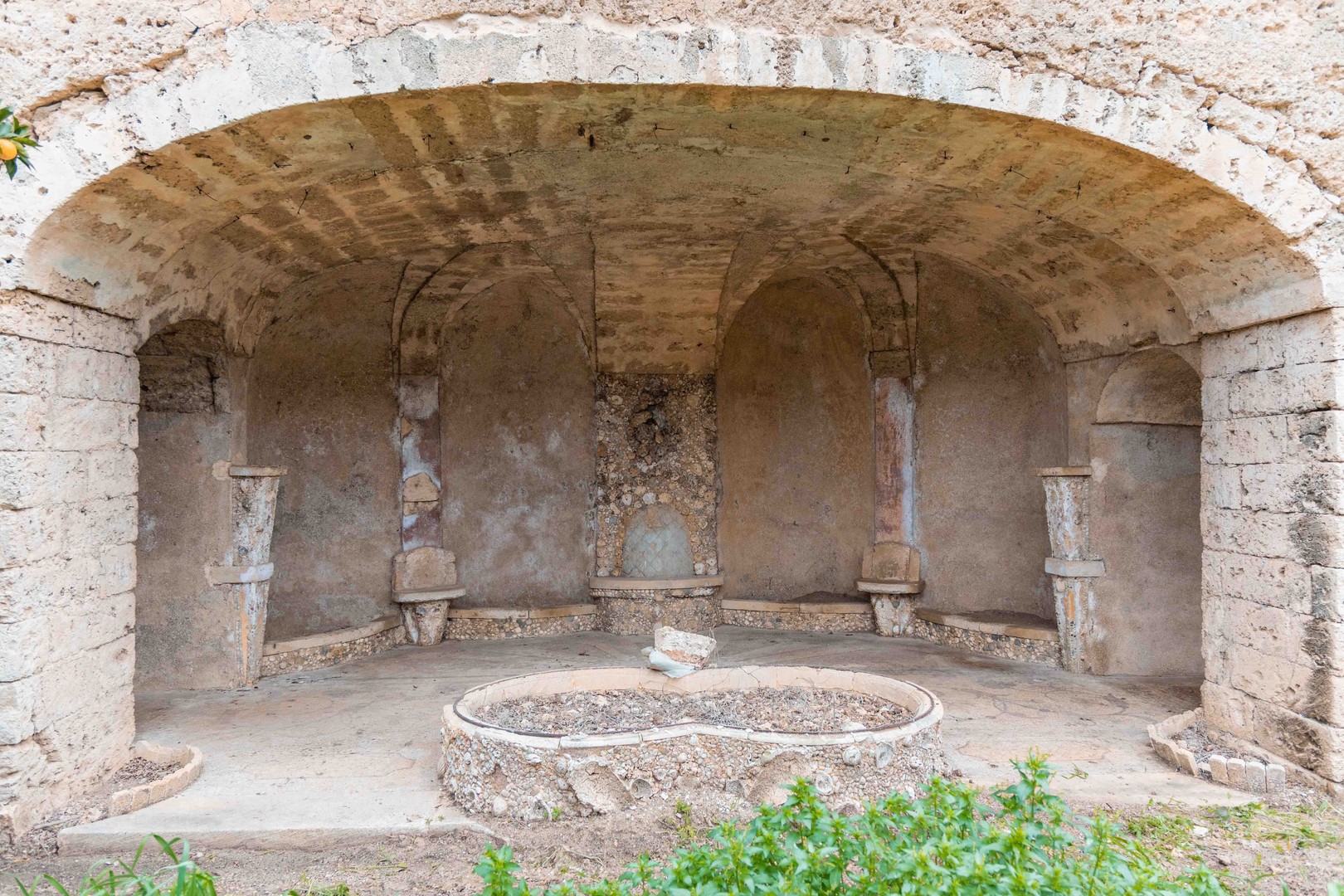
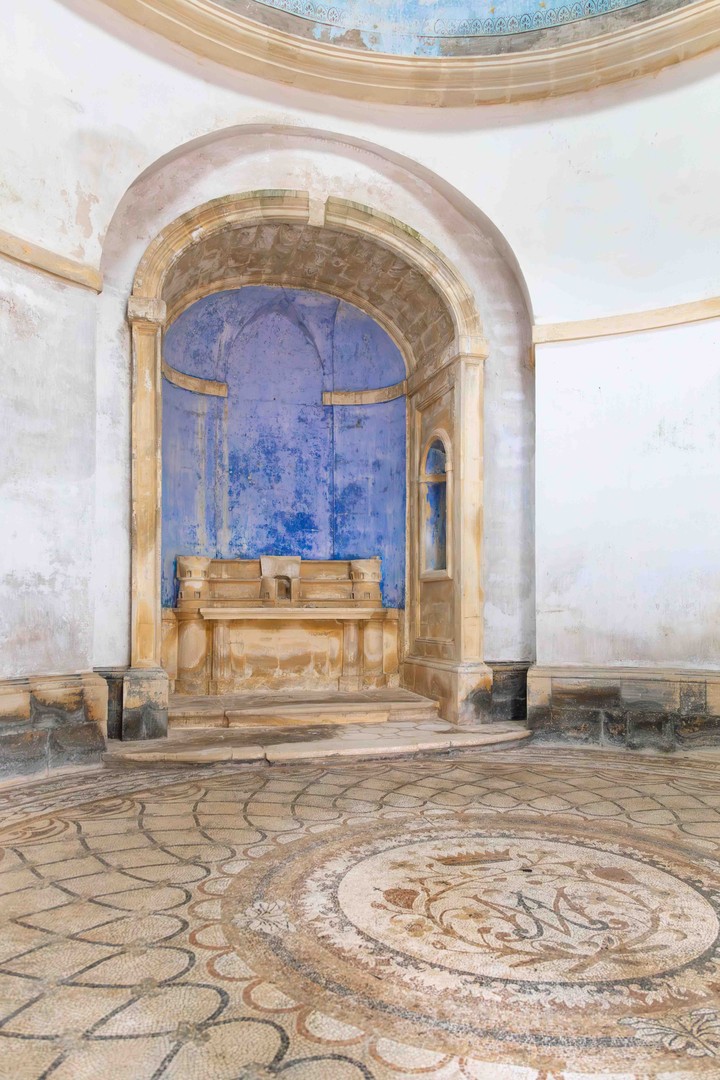
Continuing along the longer side, the wall recedes to form a wide semicircular niche. Here, the complex takes on a different character: the supporting pillars are partly faced with tuff blocks, and the ceiling opens into a semi-dome vault with small pointed lunettes.
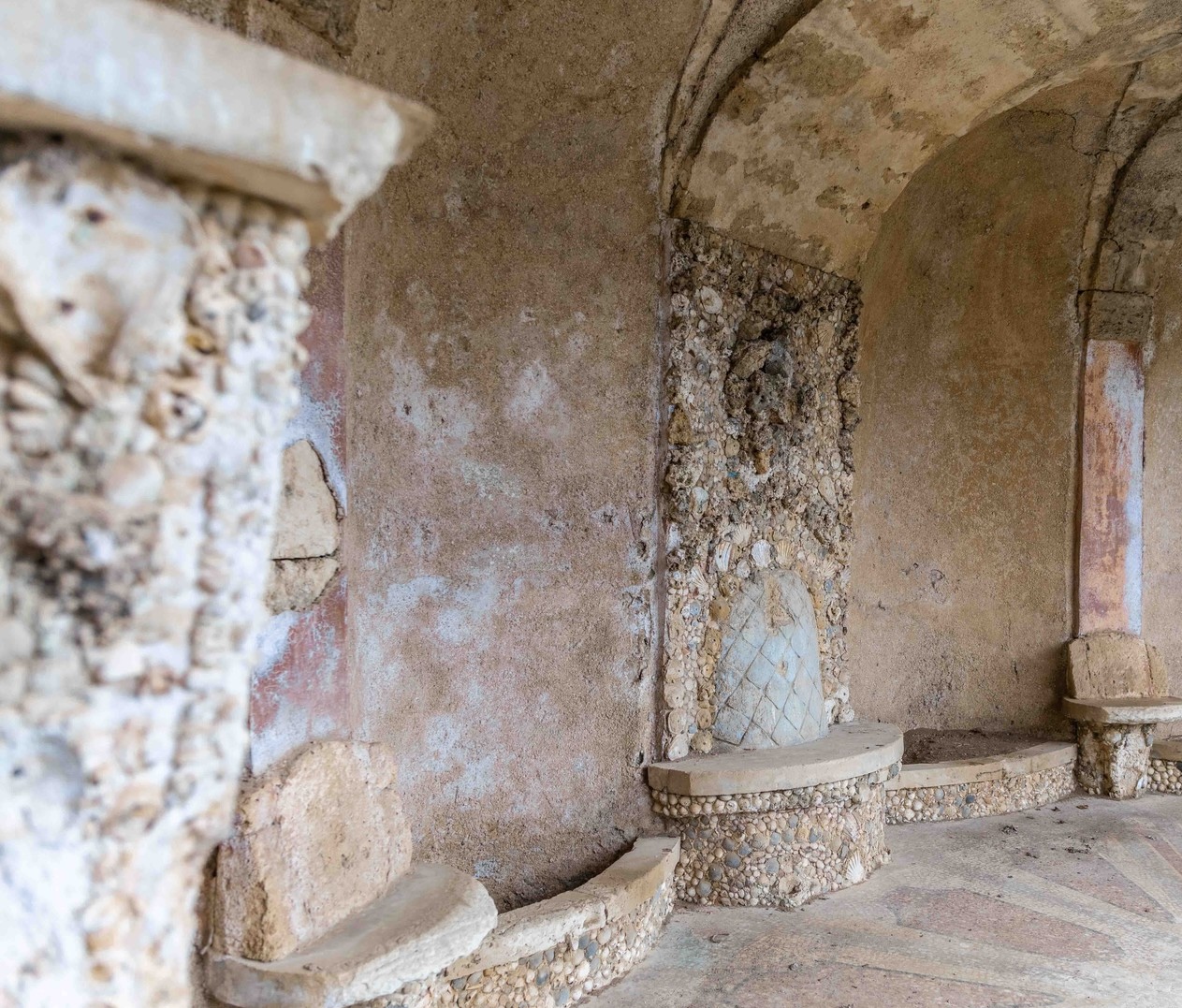
The rock in this area, being more friable, has undergone changes over time and, between the late 19th and early 20th centuries, the space was transformed into a small nymphaeum.
Stone seating, shelves, niches and decorative elements crafted with marine shells reflect this phase, along with the presence of a uniquely shaped stone basin: two circles of equal radius intersecting, a clear reference to the vesica piscis, a symbol rich in historical and spiritual meaning.
The floor still preserves traces of a mosaic with floral motifs and scrollwork, now partly concealed beneath layers of soil accumulated over time.
Chiesa di Santa Maria della Porta Galatina mosaico del leone

The guardian lion and the entrance to the chapel

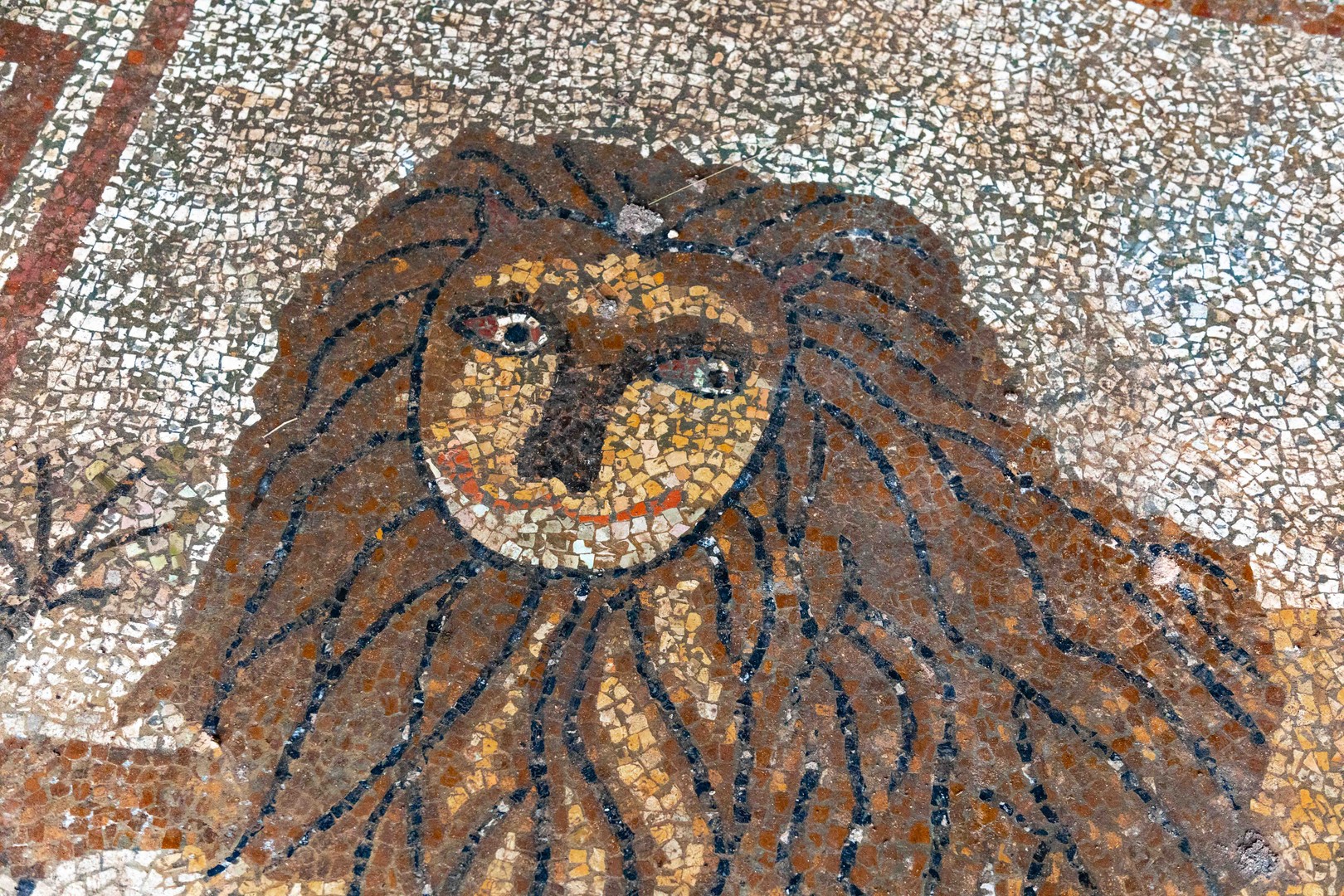
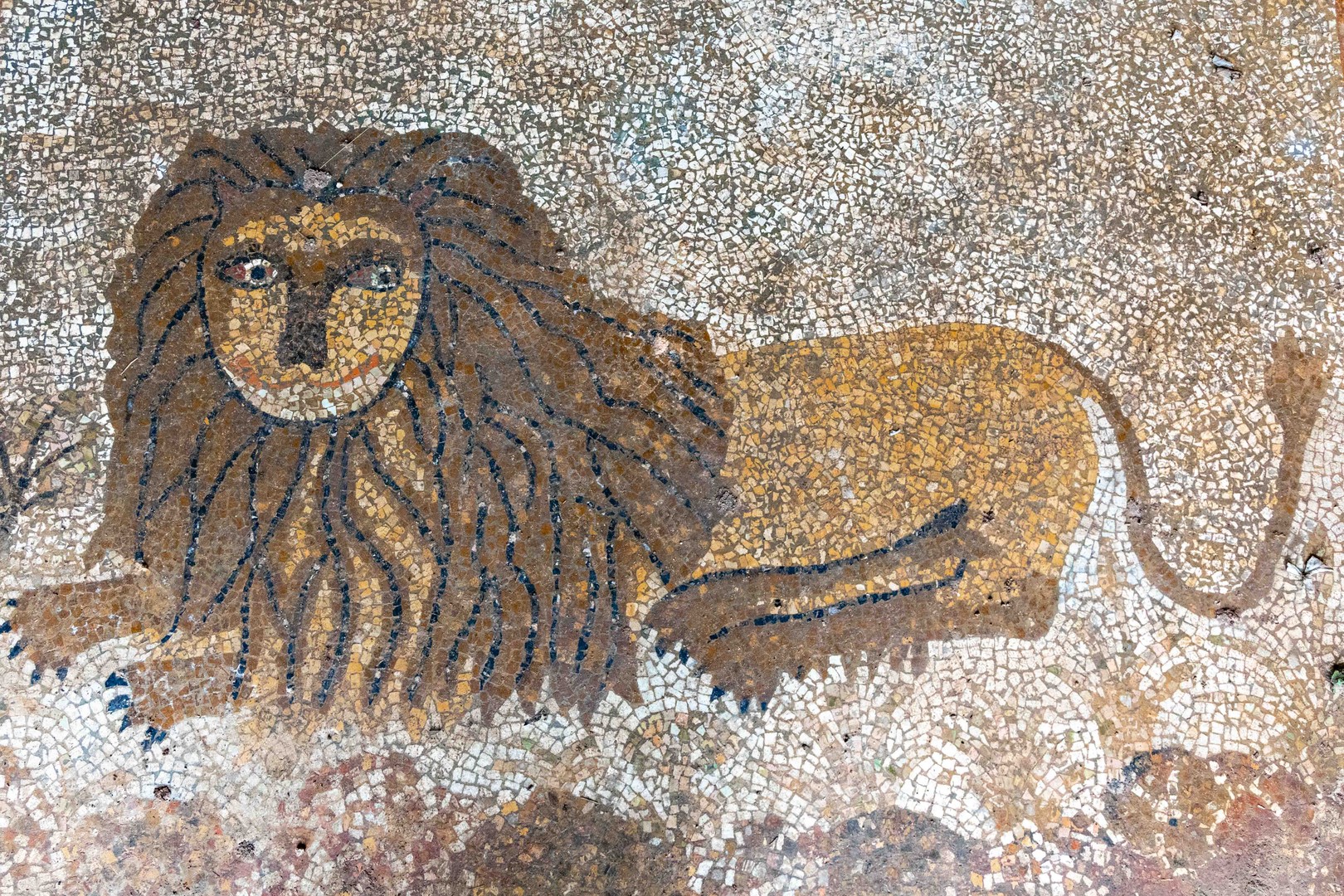
On the opposite side of the cloister, the mosaic becomes visible once again, and this is perhaps the most evocative: a lion, depicted with its body crouched and its head raised, positioned directly before the threshold of the chapel. An image that suggests the idea of a guardian, a symbol accompanying those about to cross into the sacred space.


History and atmosphere

A place that continues to tell its story

Over the years, some visitors have identified possible symbolic references in the nymphaeum and in the site’s geometric patterns. These are modern interpretations, not supported by historical documentation, yet they reveal something essential: Santa Maria della Porta is a place that invites questions, imagination, and wonder.