
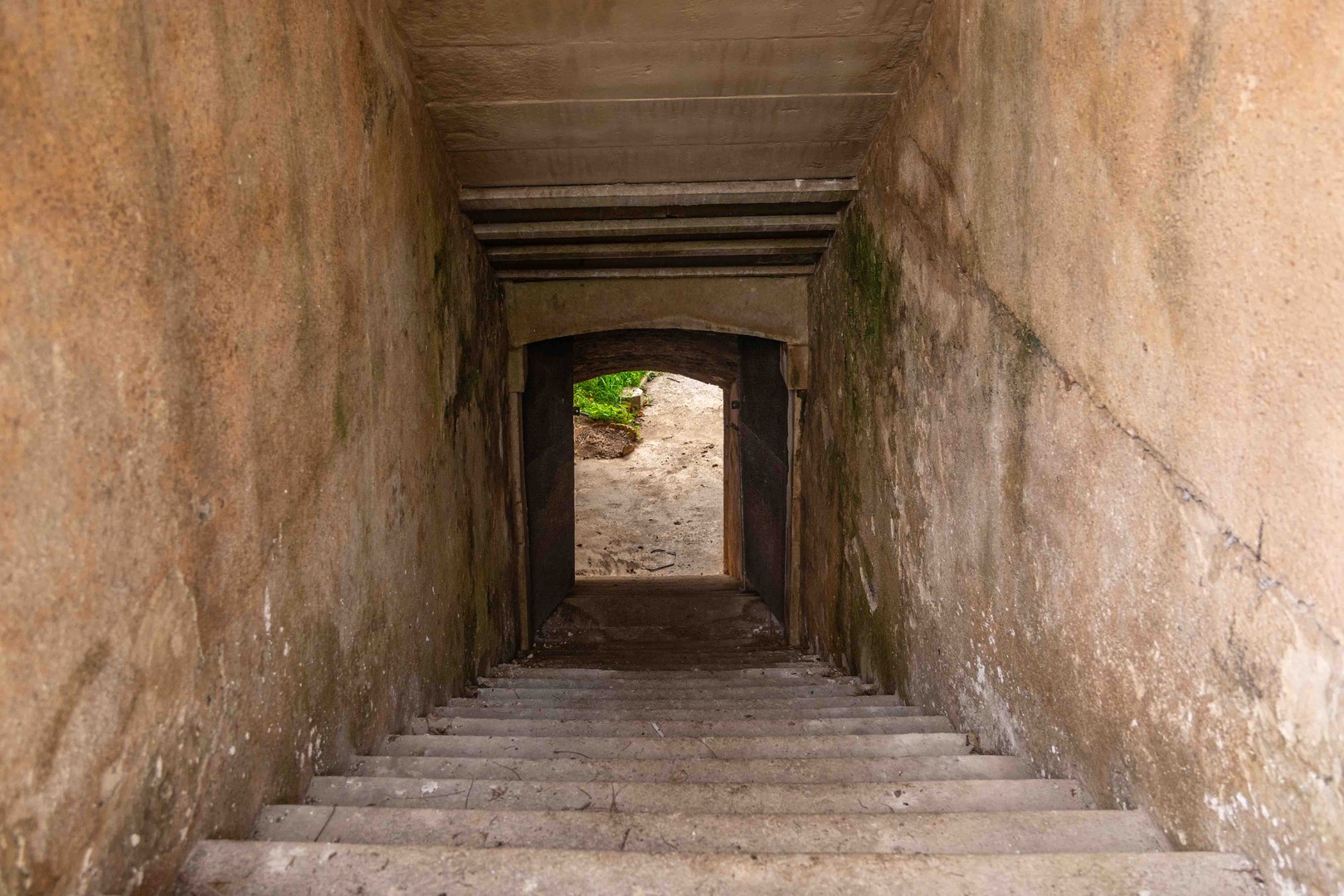
The first step
the access staircase
The first phase focused on the access staircase leading down to the underground cloister. Cleared of debris and encroaching roots, the stone steps were repositioned and the small external turret consolidated.
Nearby, and discreetly integrated into the landscape, a small restroom facility has been installed, allowing the complex to be accessible during guided visits and cultural activities.
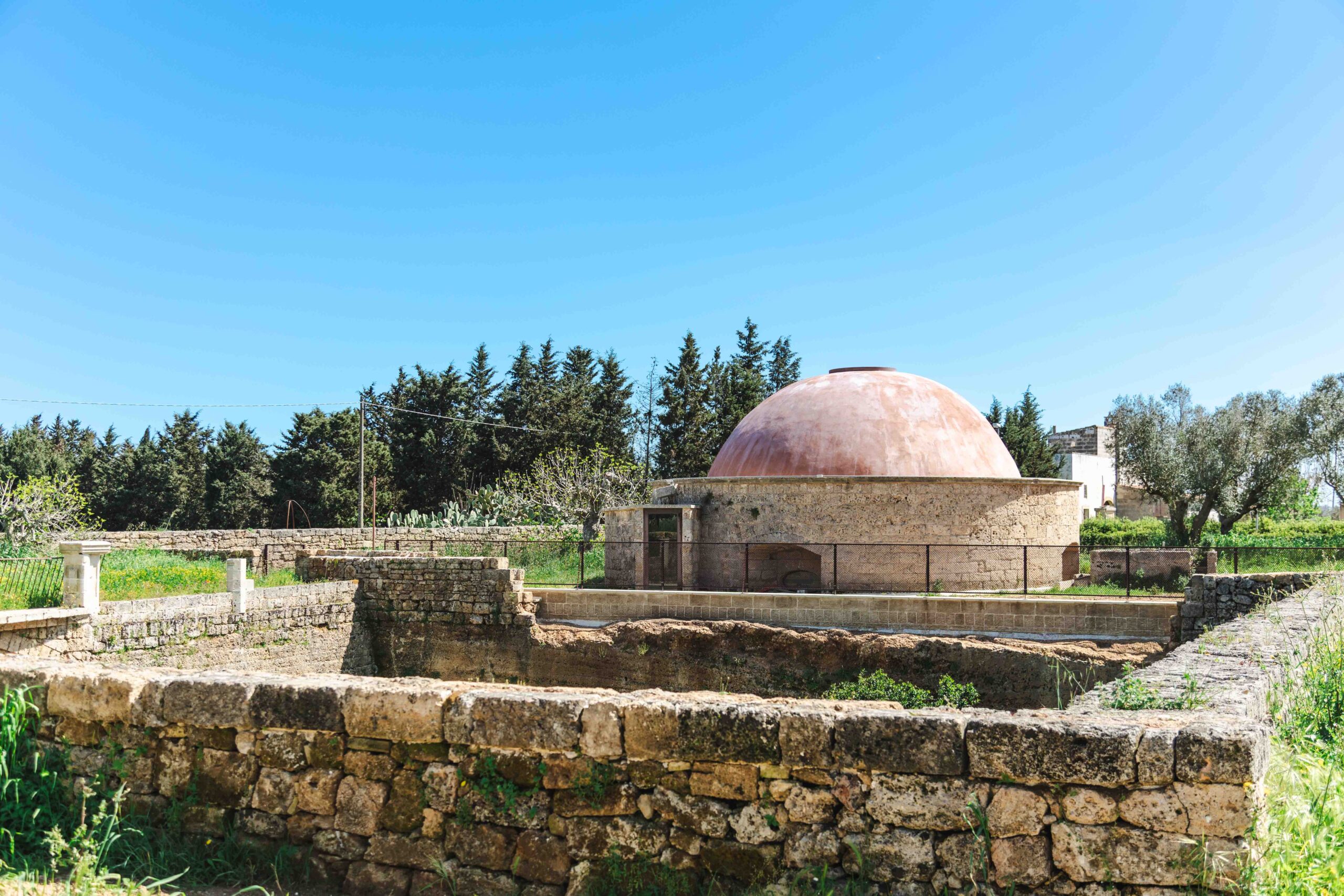
Restoration of the dry stone walls
Along the upper edge of the cloister, the existing dry stone walls have been restored, with missing sections reintegrated only where supported by documentation. On the eastern side, where a viewing edge with a railing once existed, the project included the recovery of the original elements and the recomposition of only those parts that could be reliably reconstructed. The missing portions are now safeguarded by a discreet, contemporary barrier, designed to avoid artificial imitation of the historic fabric and prevent misleading reconstructions.
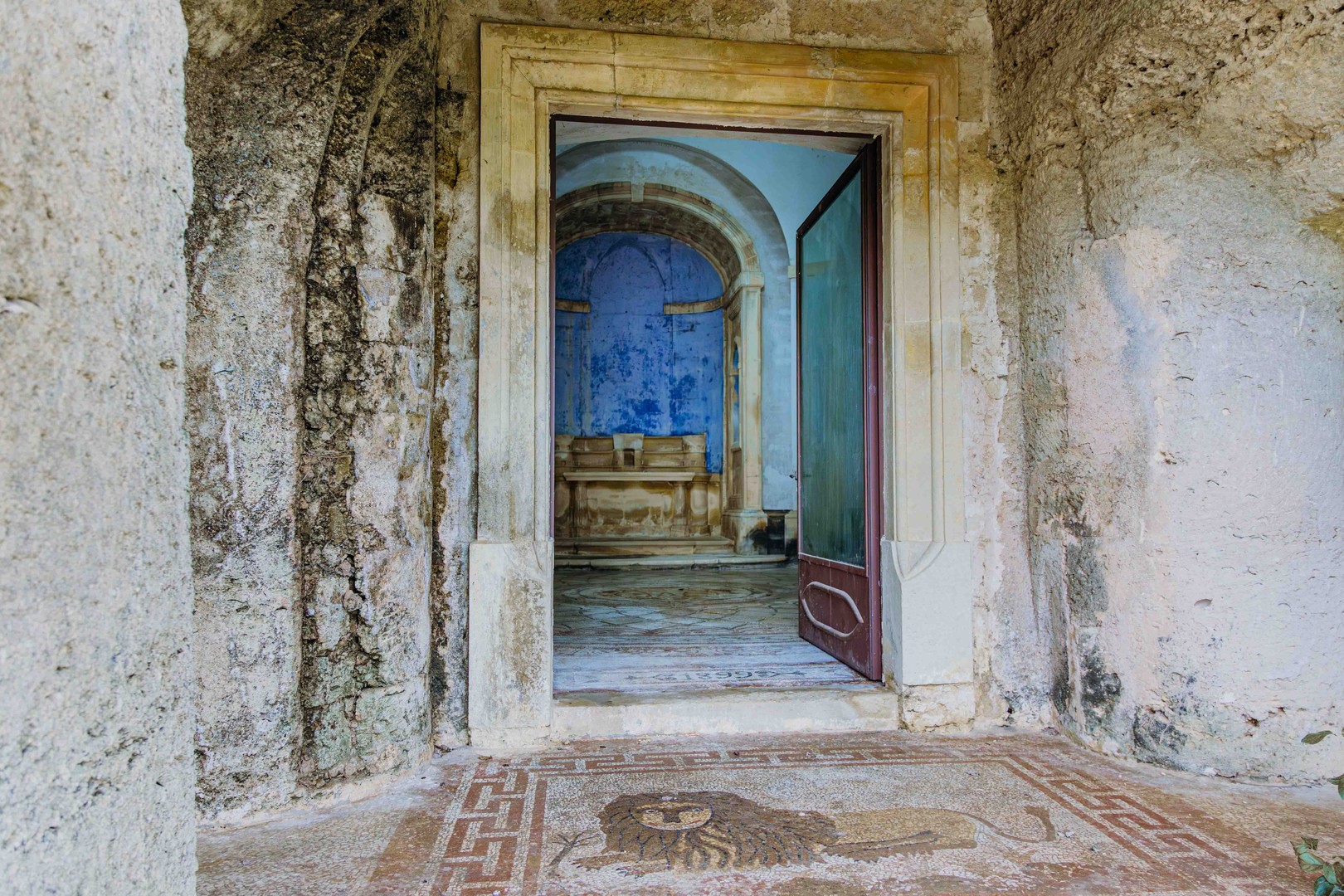
the 19th-century chapel
Together with the mosaic floor dated 1899 and the starry dome, the chapel has undergone a dedicated intervention. The Lecce stone altar was reassembled using the original elements preserved by the owner. The internal surfaces were cleaned and chromatically harmonised, respecting the existing tones, while the decoration of the dome was restored by specialised conservators.
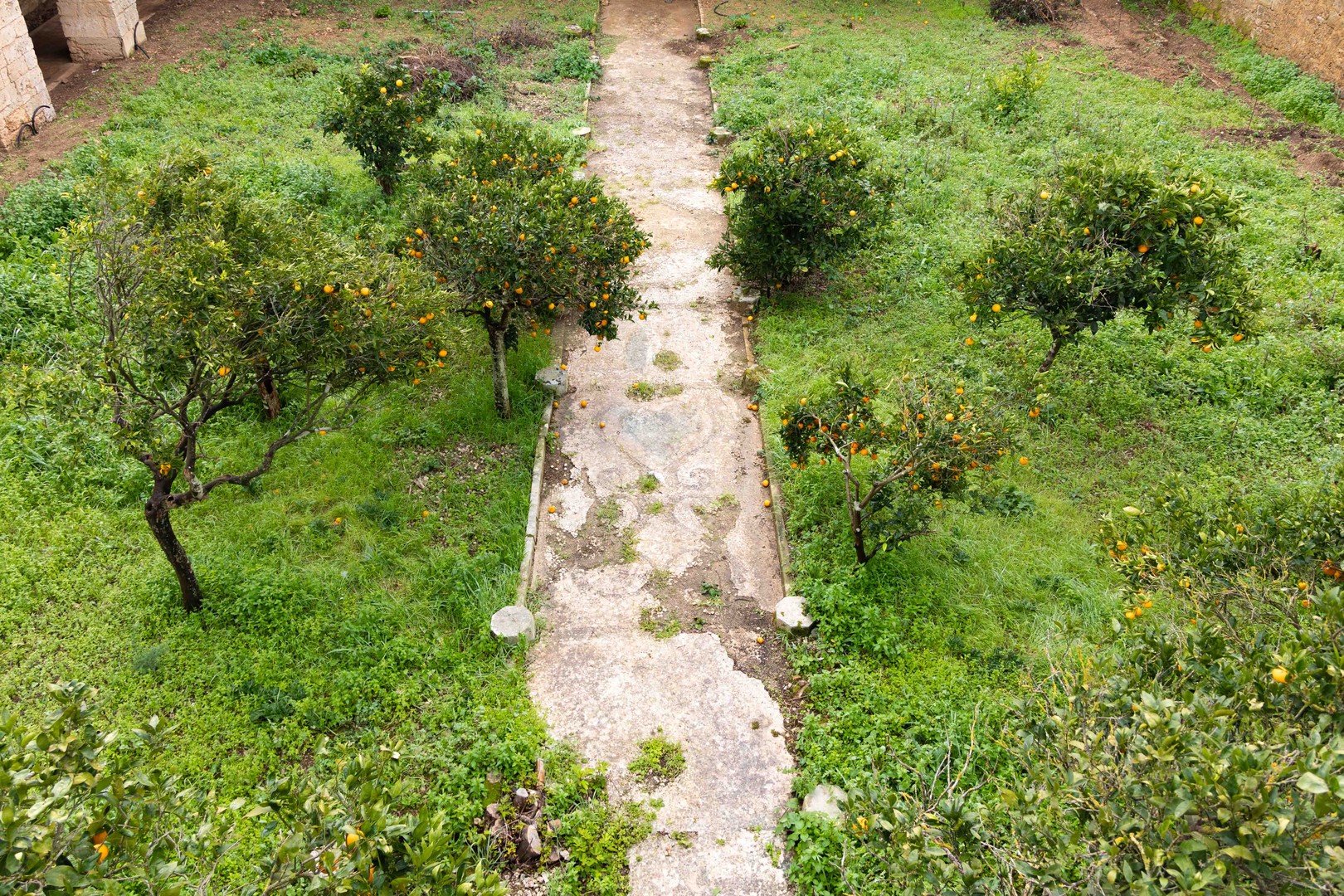
The inner garden
Once a small citrus grove, the area has been cleared of invasive vegetation and replanted with local varieties, following an orderly layout that reflects the original arrangement.
The central path, brought back to light, once again establishes a visual connection between the cloister entrance and the chapel.
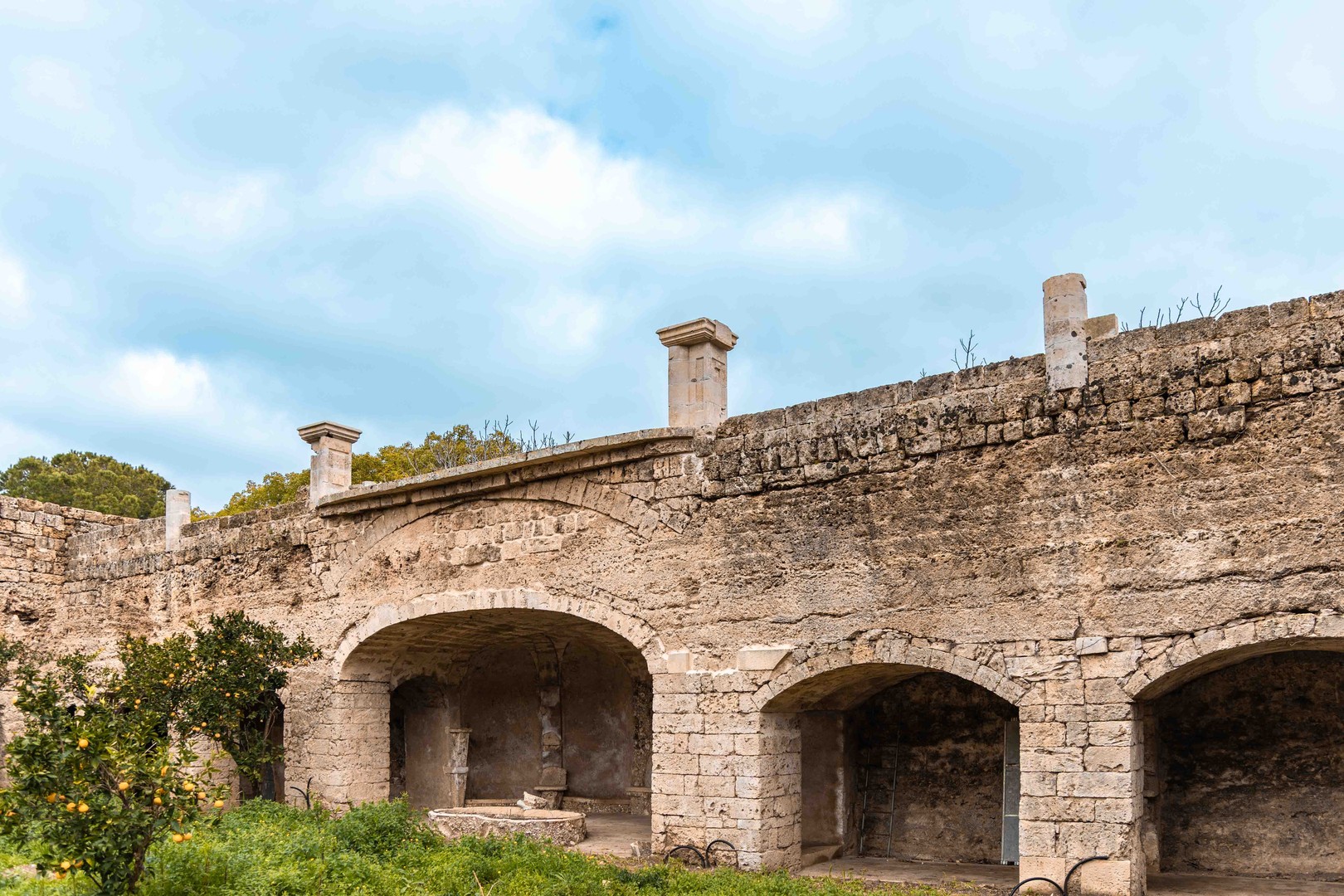
the rock-cut cloister
Within the excavated space, the rock-cut cloister has regained its legibility: the rock surfaces have been cleaned using non-invasive methods and consolidated where the calcarenite proved more fragile. The large exedra-nymphaeum, once almost entirely concealed by vegetation and deposits, is now clearly recognisable again: the shell-clad seating, niches, and the bi-circular basin have re-emerged, testifying to the decorative intervention carried out between the late 19th and early 20th centuries.
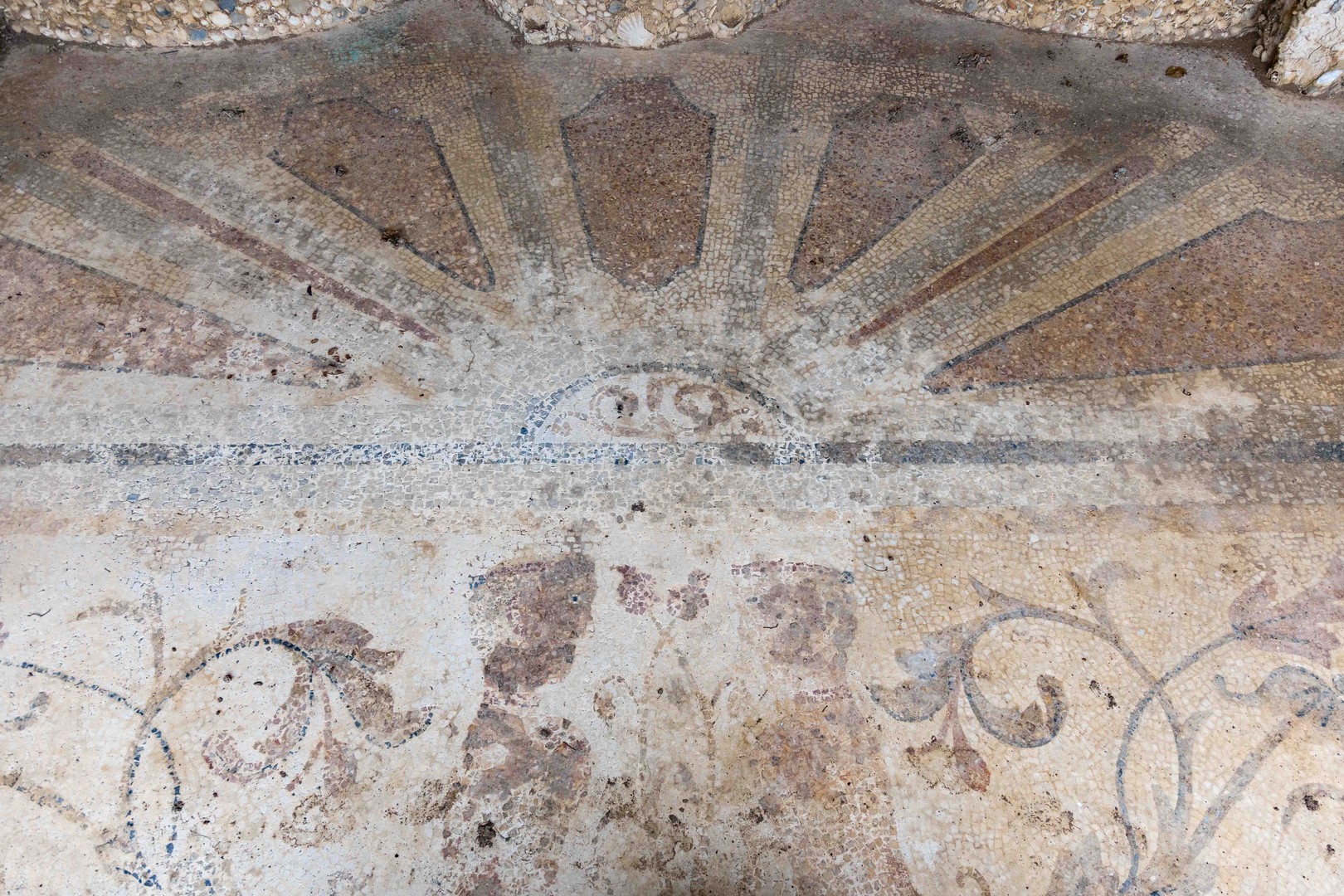
The mosaic floor
Particular attention was given to the mosaic flooring, present in the cloister, along the central path, and within the chapel. The surfaces were cleared of accumulated soil and roots, loose tesserae were secured, and the lacunae were integrated in a recognisable way, restoring continuity to the flooring without altering its character.
The stone tiles forming the apse area of the chapel were also repositioned in their original layout.
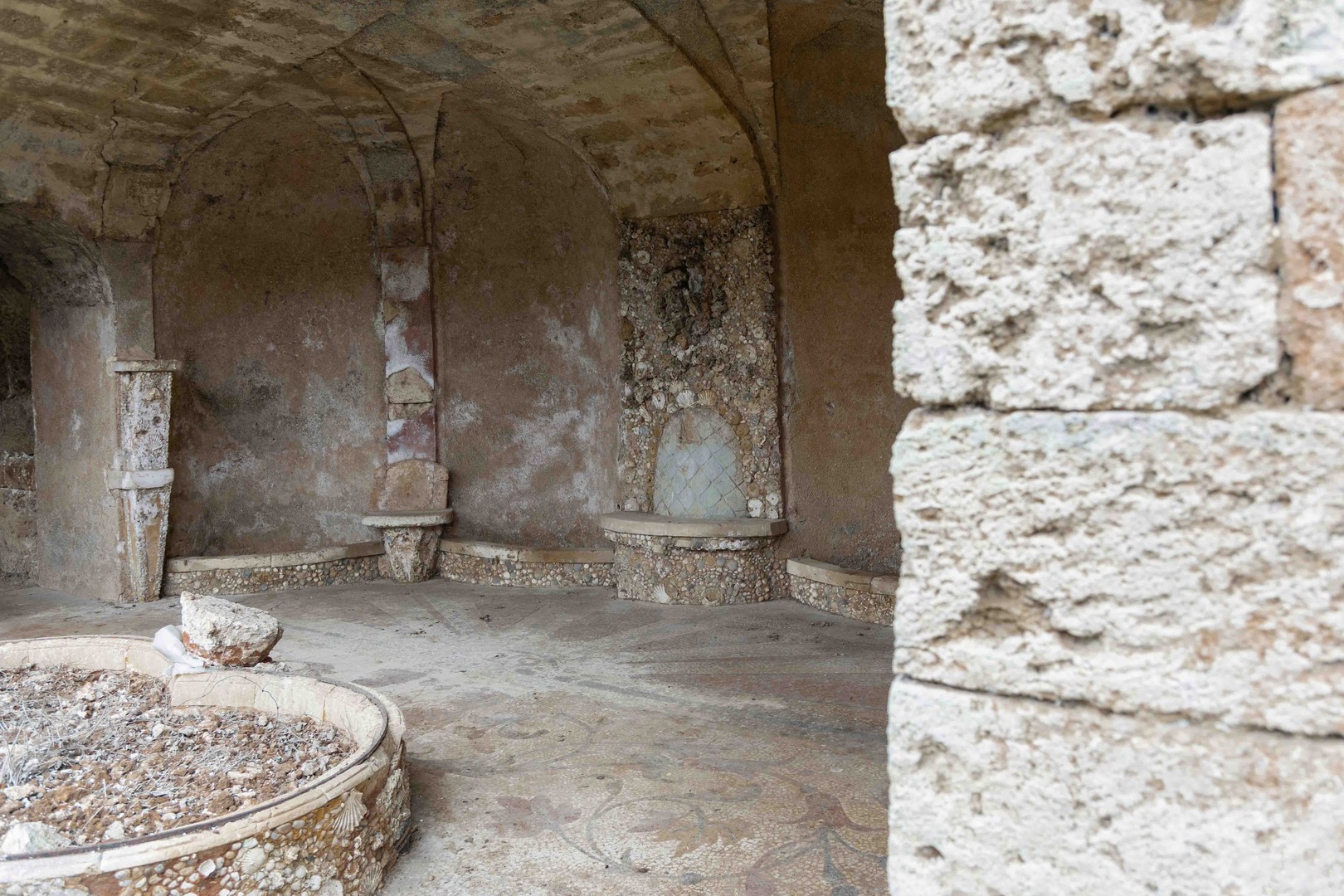
lighting system
Finally, to ensure the complex can be safely accessed, a subtle and minimally invasive lighting system has been installed, designed to enhance the site’s underground character.
The main openings have been fitted with simple iron closures, providing protection while allowing for controlled access during visits.